

Most EA Candidates Fail Before We Ever Meet- Advice From an Expert, Shelley Trask
Most EA Candidates Fail Before We Ever Meet- Advise from an Expert, Shelley Trask
The Executive Assistant market is highly competitive. So many capable & accomplished EA candidates find themselves stalled in the interview process despite having strong experience and impressive backgrounds.
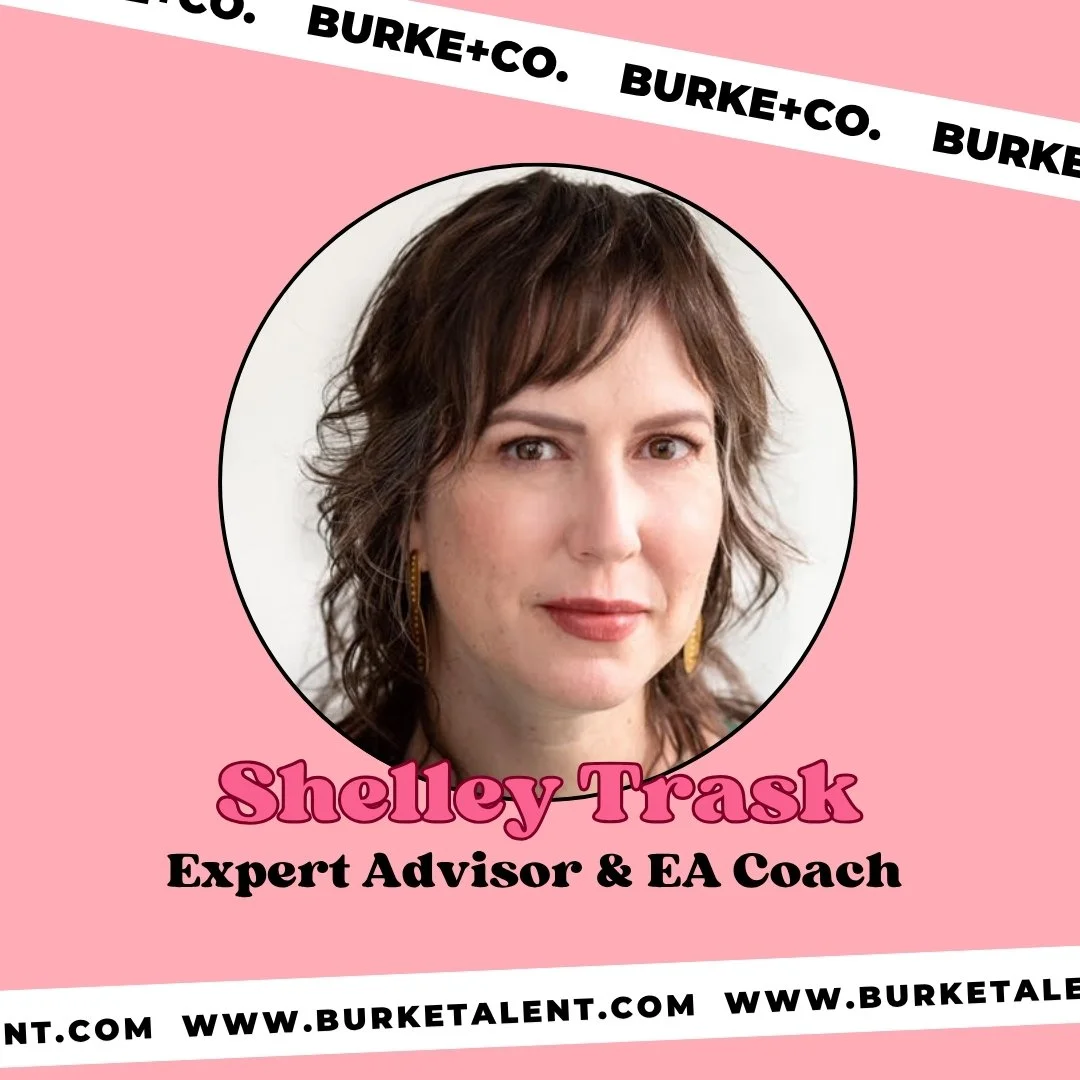
Executive Operations Professional & EA Coach, Shelley Trask, shares valuable insight on where talented EA candidates actually get stuck during the hiring journey. This is a great read for learning what hiring teams are really looking for and how candidates can better communicate their value!
Where most EA candidates actually get stuck
Here's the part of the EA hiring process that nobody talks about: most candidates don't get filtered out in the actual interview. They get filtered out before we ever meet.
Out of the nearly 2,500 resumes I'll see for a single EA role, only a handful make it to my video screen. The two gates that do most of that cutting are your resume and your first recorded video round. And here's the painful part: most candidates never realize that's where they got knocked out. They just never hear back.
Same as my last post: I am rooting for you. I want you through these gates. So let me show you what I'm actually seeing, and what would have moved you to the next stage. 💌
⏰ Your resume gets about 8 seconds. Use them.
When I'm scanning resumes from a pool of thousands, I am not reading your bullet points. I am scanning for one thing: can I quickly answer Company, Tenure, Role, in that order, for every job you've held?
If I have to fight my way through a wall of dense text, hunt for dates buried in italic gray font, or piece together your timeline from inconsistently-formatted bullets, you're already losing.
What I want to see in 8 seconds:
Clean formatting. Attractive font. Black text on white. Generous spacing.
Company name in a bold, scannable weight.
Dates that are immediately legible. Not light gray. Not microscopic.
Role title that tells me exactly what you did.
I don't need fancy. I need readable. I would absolutely love good design. Bonus points if you can give me a font that doesn't make my eyes bleed.
🏢 The unfair part: where you've worked matters.
I'll be honest about something. When I scan a resume, I'm not just looking at your role. I'm looking at the kind of company you worked at. Was it a fast-paced tech company? A growth-stage startup? Or are you coming from a more traditional environment, like a law firm, a paper manufacturer, a public utility?
This is unfair, and I know it because I lived it. I spent years in environmental consulting before I broke into tech, and I only made the jump because someone could vouch for me across that gap. Without a direct reference, breaking into tech can feel impossible.
I am not auto-rejecting you because of where you worked. But I am making fast assumptions about pace, exposure, and the tools you're used to. If your work history doesn't telegraph "fast tech company," it's on you to prove it in your bullets. Quantify the volume. Mention the AI tools you've integrated. Talk about the cross-functional juggling. Your resume has to do the work your company name won't.
Also, do me a solid and put a few words next to each company explaining what they actually do. "Llamabarn" - is that AI or an actual llama farm?
🔗 Your LinkedIn better match your resume. Perfectly.
True story: most recruiters scan your resume for a few seconds, then click straight through to your LinkedIn. Why? Because LinkedIn is usually faster to read than your formatted resume.
If your LinkedIn shows different roles, different dates, or different company names than your resume, that's a problem. The version I see most often: "Executive Assistant" on the resume, "Program Manager" or "Marketing Events Lead" on LinkedIn for the same job. Now I have no idea which version of you I'm evaluating, and I'm not going to spend time figuring it out.
Match them. Same companies. Same dates. Same titles. Same chronology. If you update one, update the other. Same day.
🛠 Show me how you're using AI.
Once I've got Company, Tenure, Role figured out, the next thing I'm scanning for is your tooling. Calendaring platforms, travel systems, expense management. Those are the floor.
What I really want to see in 2026 is how you're using AI. Claude. ChatGPT. Meeting transcription tools like Granola. Workflow automation. The standout EA candidates right now are the ones building AI into their daily work, not just listing it as a skill. If you can't use it at work, explain how you use it personally.
Don't bury this. Don't be vague. Tell me what you're actually doing with these tools. "Used ChatGPT" tells me nothing. My Mom "uses AI" too. "Built a Claude prompt that turns meeting transcripts into prioritized to-do lists for my exec" tells me everything.
🎬 The first video stage is where most people fall apart.
If your resume and LinkedIn got you through the first cut, the next stage is almost always a recorded video screen or a recruiter call. (In our case, candidates record three short videos answering specific questions before they ever talk to a human.) This is where I see the biggest fall-off after resumes, and the reason is almost always the same.
Candidates treat it like a casual selfie video instead of a real interview.
A recorded video screen is an interview. Same rules apply:
Wear a headset. I will keep saying this until everyone hears me. Literally.
Light yourself. I'm watching back-to-back with twenty others. If I can't see your face, you're a blur in my memory. Literally.
Dress like you would for an in-person interview. I'm seeing a lot of candidates wearing things on video that they would never wear if they were sitting across from me in a conference room. Sweatshirts. Tank tops. The hoodie you're definitely going to wear to work once you have the job. Get the job first. Then wear the hoodie.
Don't read from a script. If you have one minute to talk about yourself, you shouldn't need a script to do it. (And yes, I can see your eyes scanning.) For the record, I'm watching these recordings sometimes two or three times, looking for a reason to pass you to the next round. Don't make that hard for me.
Be specific. Each video is short. Don't waste it on theory. Get to the story fast. Slow talkers = slow workers?
Smile at the camera. I know there's no human on the other side at the moment of recording. I am that human, watching later. Smile at me.
Let your personality come through. This isn't just a skills check. I'm trying to figure out if I want to work with you for the next several years. Light up when you talk about something you actually loved doing. EA work is hard, and the curveballs are constant. The candidates who get my attention are the ones who can laugh at the chaos instead of being crushed by it. People hire people they want to be around, and "around" for an EA means standing next to your exec when the day is on fire.
The candidates who break through this stage do it by treating the recording with the same energy they'd bring to a live conversation. Not more polished. Same energy.
✨ Real talk.
If you've been getting "we'll be in touch" emails but never an actual interview, I'd bet good money the issue is in your resume or your first video round, not your actual skills.
Most candidates don't get knocked out because they couldn't do the job. They get knocked out because they didn't show me they could do the job in the 8 seconds I scan their resume, or in the 60 seconds they had on a recorded video. That's brutal, but it's the math when 2,500 people are competing for one role.
The good news: these are the most fixable parts of the entire process.
Reformat your resume tonight. Use AI to do it.
Match your LinkedIn to it tomorrow.
Make your AI tooling impossible to miss.
Re-record your videos with a headset, a lamp, and zero scripts.
By the way, I'm still hiring. If you're a New York-based EA, please apply.
The kind of EA I'm dreaming about: proactive, ownership mindset, sees problems and fixes them without asking permission, automates everything they don't need to do themselves. Team-player. Systems thinker. The dream is someone who comes to me to share their wins, not their blockers. (Though I'm always here when something actually needs unblocking.)
Fair warning: you'll be getting this kind of direct, unfiltered feedback from me on the reg. I don't micromanage, which means I need you to bring it. If you're up for that, and you want to become an incredible EA, I'm rooting for you. 💌
—By the AMAZING Shelley Trask; Exec Ops @ Ramp | ex-Slack | EA & Corporate Coach | eaMAFIA | OrgOrg Volunteer